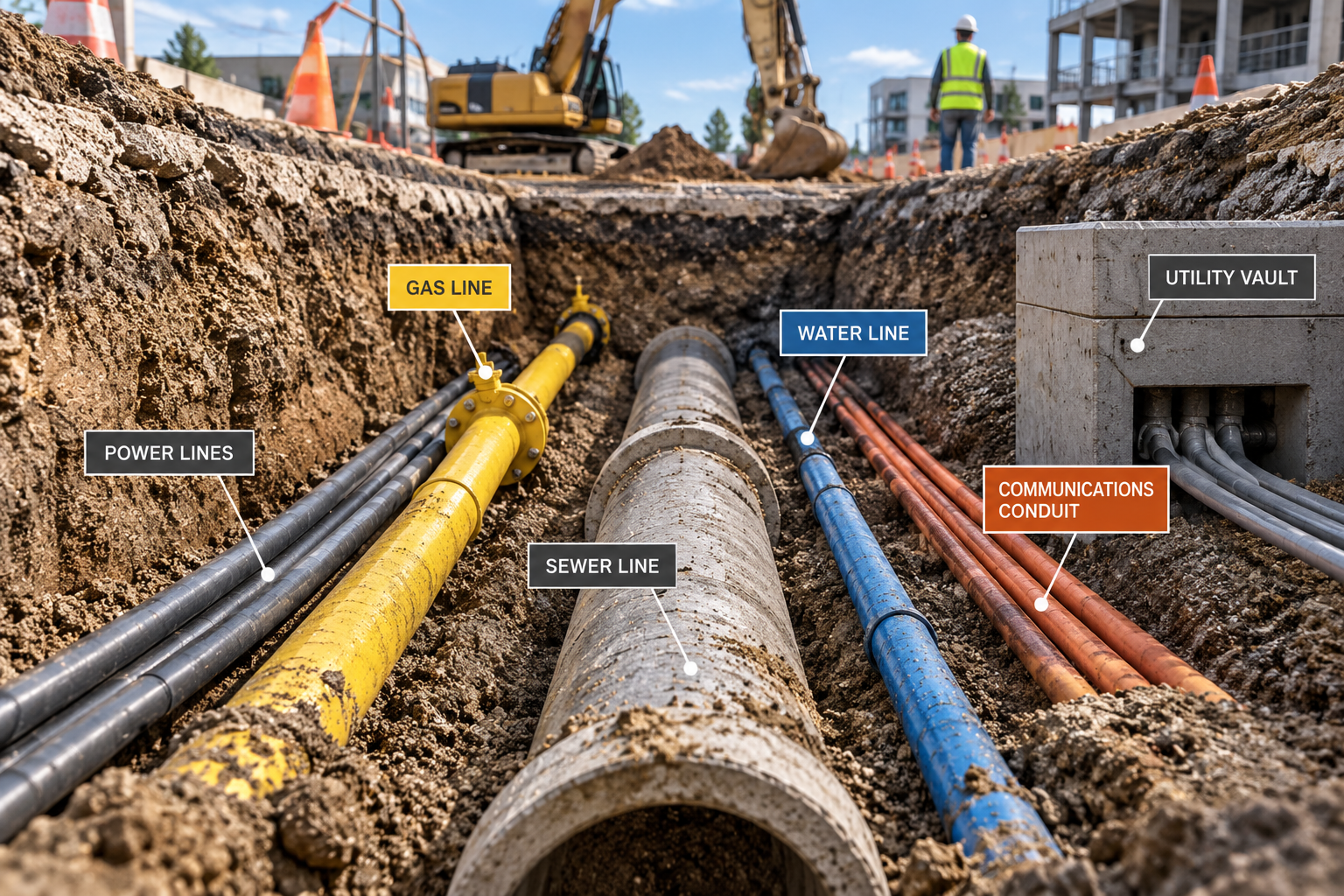
Underground
- Power
- Gas
- Water
- Sewer
- Other subsurface infrastructure
See Thru Concrete maps hidden infrastructure inside concrete, underground, and above ceilings so construction teams can understand existing conditions before work begins.
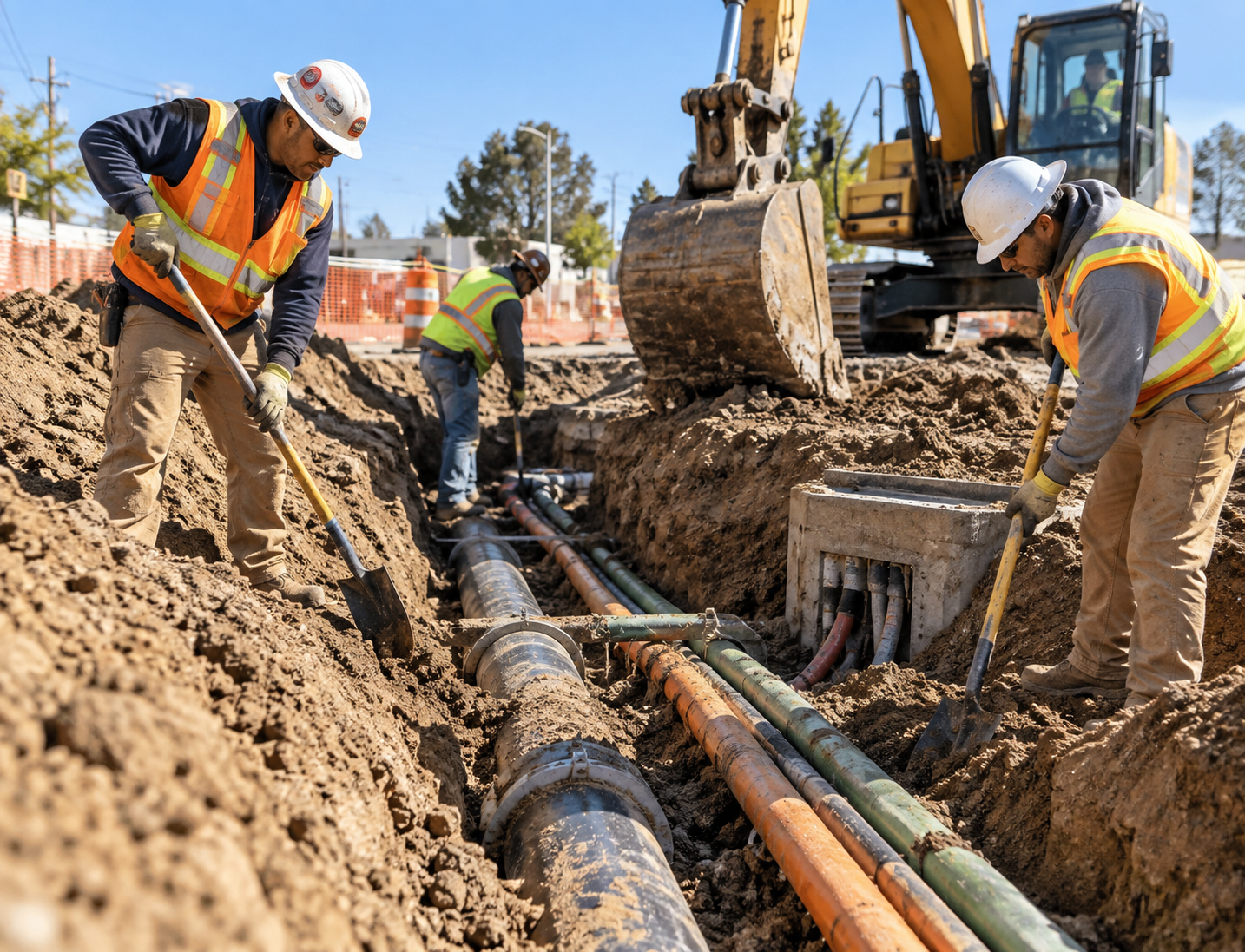
Construction teams often make decisions based on incomplete or outdated information about what exists underground or inside a structure.
See Thru Concrete provides a way to understand those hidden conditions before crews dig, drill, cut, or renovate.
A fast detection pass identifies disturbances, followed by a slower mapping pass that builds a structured record of what may sit behind the surface and how its electrical signature changes.
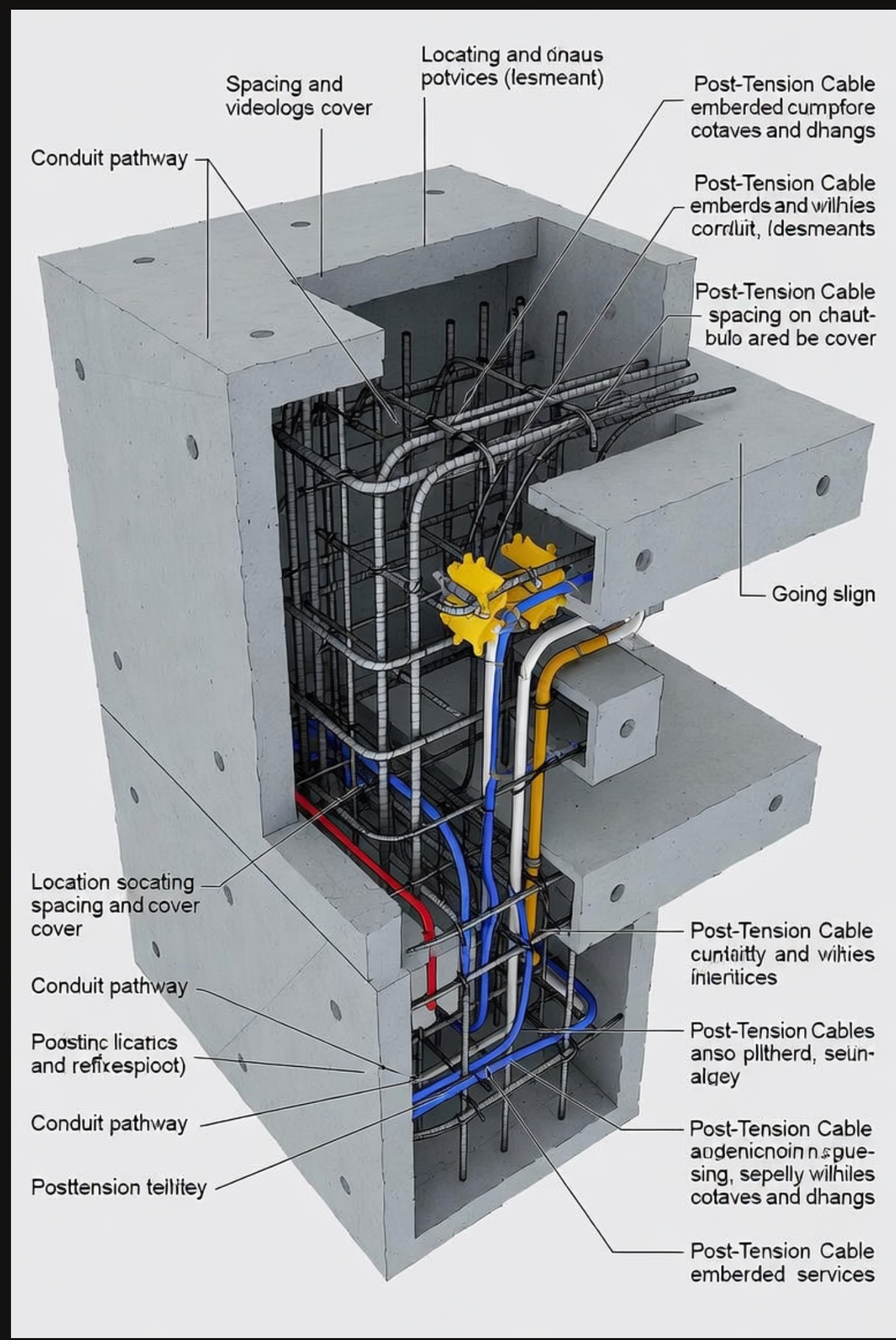
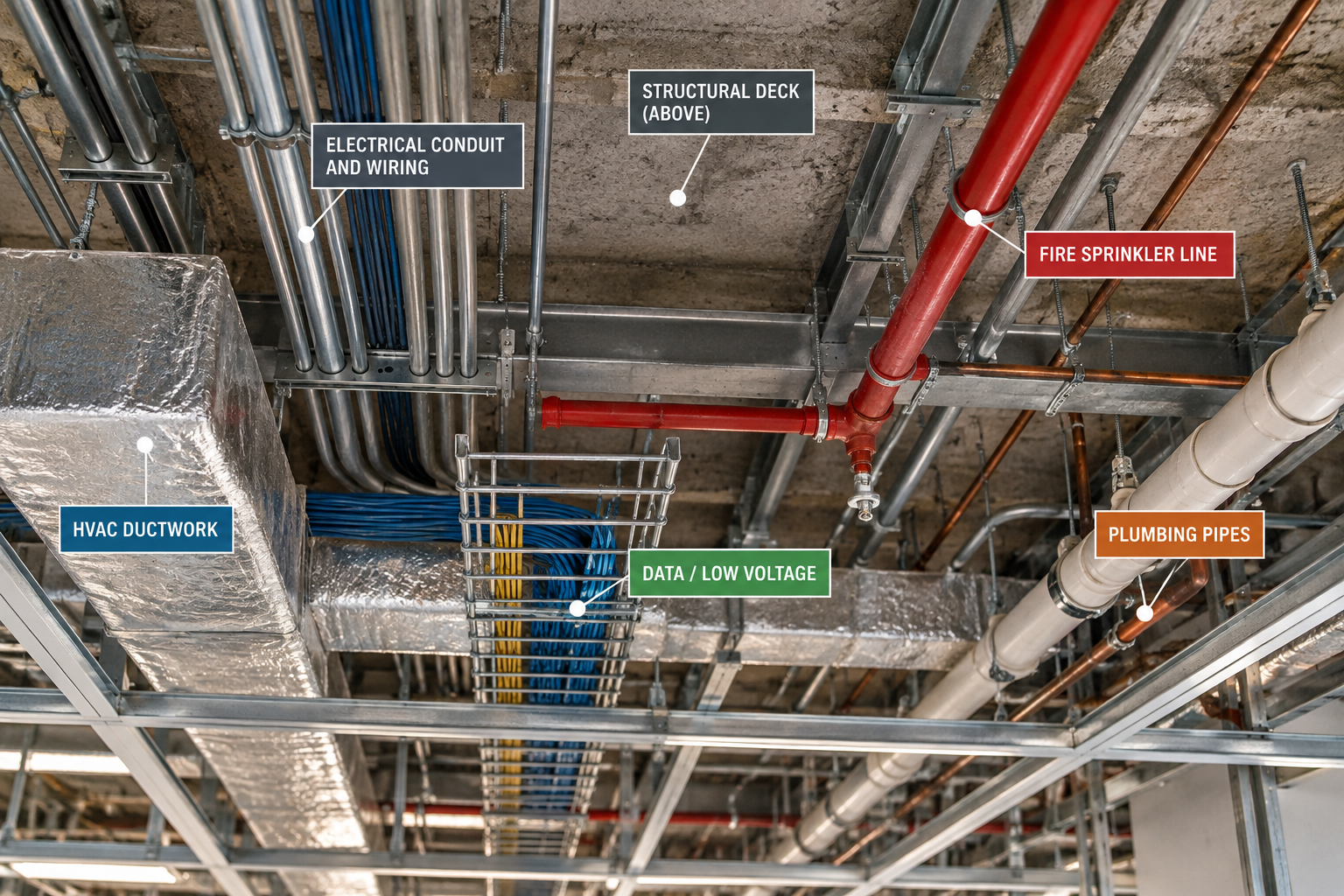
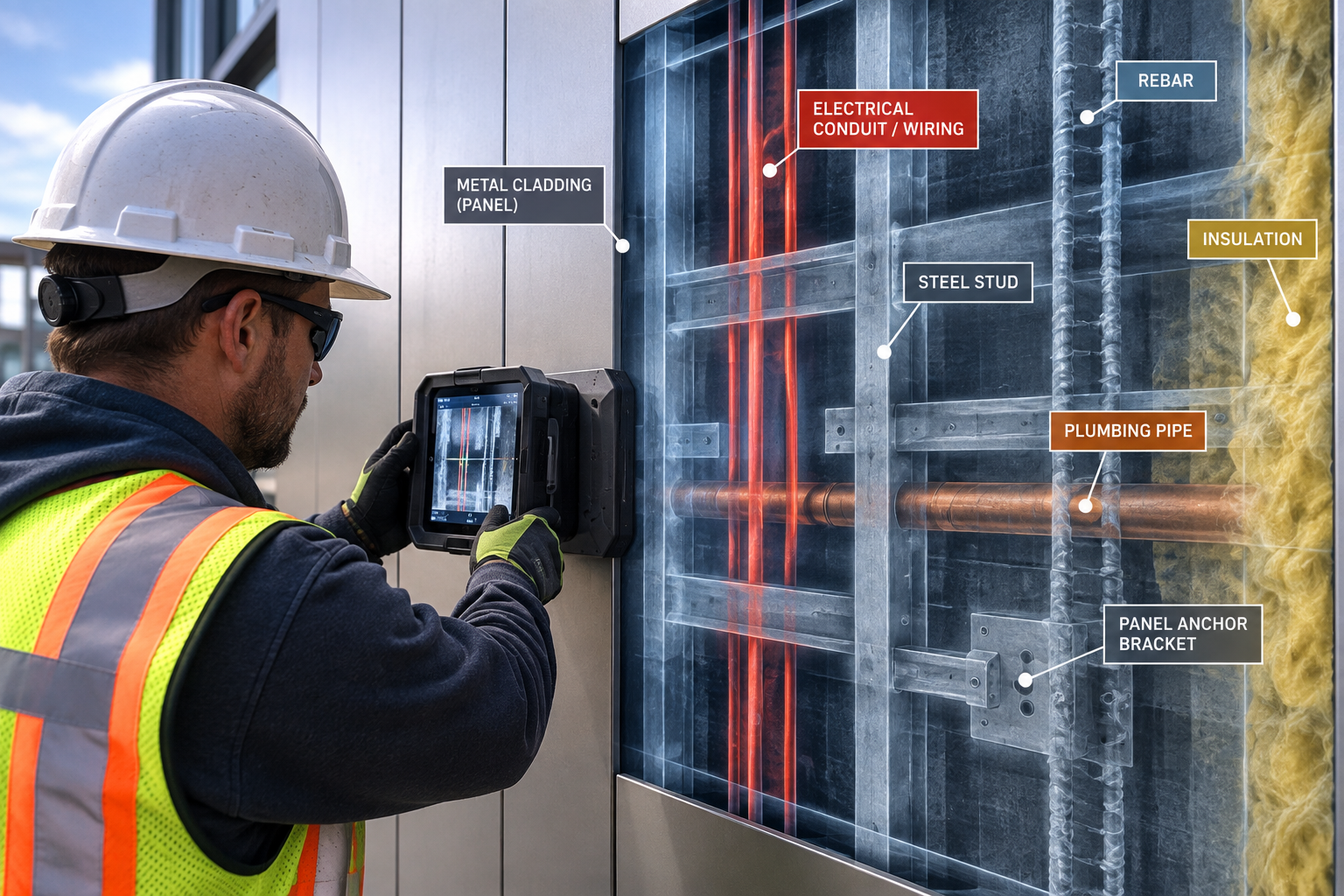
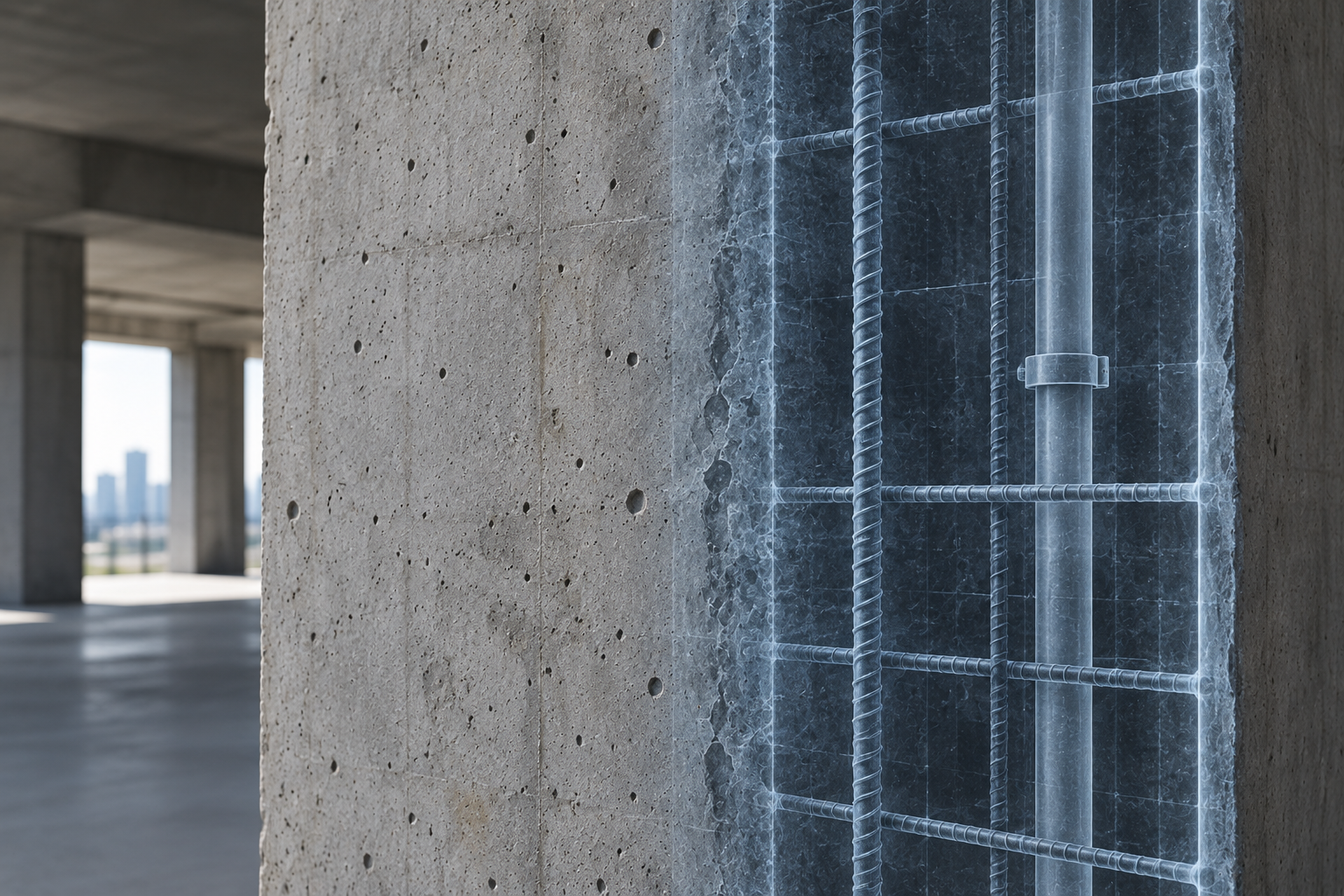
The dashboard is designed to turn measured field perturbations into an interpreted cross-section, classifying likely rebar, conduit, pipes, voids, and moisture-related anomalies with confidence estimates.
Sweep the area to identify disturbances, then map areas of interest by position and depth setting.
Classify measured disturbances into likely object or material classes.
Convert the interpreted measurements into a structured spatial representation.
Use the information to make better construction decisions.
Our proprietary sensing approach drives a very-low-frequency electromagnetic field into concrete or soil and measures how the surrounding volume electrically loads that field. The system is being developed toward approximately 6 ft of concrete depth, with performance currently being validated in controlled setups.
Cole FranklinCo-Founder & Chief Scientist · Principal Scientist, Apple · 11 patents
GPR is excellent at locating reinforcing steel. Our method is being developed to add another kind of information: changes in electrical loading along the same member, which may reveal changes in condition that a strong radar reflection alone does not quantify.
Corrosion can change cross-section, surface condition, conductivity, contact, and local loss. Those changes can alter the electrical signature along a bar. Controlled, labeled field trials are still required before corrosion severity or remaining section can be claimed as a product measurement.
We do not claim bar grade, concrete compressive strength, certified corrosion grade, or structural capacity from the scan alone. Those require appropriate validation and, where necessary, physical testing.
Improve the first-party map of reinforcement and other hidden conditions so engineers can target follow-up investigation and reduce reliance on incomplete drawings or assumptions.
Designed for nondestructive, same-side scanning that may reduce disruption compared with opening the structure for every investigation point.
Destructive openings sample specific locations. A repeatable scanning workflow can provide broader first-party coverage and help target the locations that merit follow-up.
Because the sensing method is nondestructive, the same element can be rescanned over time. Repeated measurements may support change tracking once repeatability is validated.
California acute care buildings must be capable of staying operational after an earthquake by 2030, and the upgrade path depends on knowing what reinforcement is actually in the building. Better first-party information can help engineers refine assumptions and target the investigations needed for retrofit decisions.
Decks, aprons, wharves and piles that cannot be closed in order to be inspected, sitting in the chloride exposure that attacks them fastest. The same-side, nondestructive workflow is intended to fit constrained operating windows.
Delamination and corroding reinforcement start inside the slab and reach the surface late. Map subsurface anomalies nondestructively and use the results to target follow-up investigation where it is most valuable.
The most chloride-loaded concrete anyone owns. Vehicles carry brine directly onto the deck where it ponds, and post-tension corrosion stays invisible until it is not.
Decades of deferred maintenance with no way to rank it except by what has become visible. Turn a backlog into a capital plan backed by measurements.
You carry the liability and you write the inspection scope. Use broader nondestructive mapping to target destructive openings and other follow-up tests more intelligently.
Bridges, hospitals, garages, and towers get inspected on a schedule and repaired on a budget. Both decisions rest on the condition of concrete poured decades ago, covered since, and never opened.
Scanning is intended to give the owner a first-party subsurface map without routinely taking the structure apart.
Decks, piers, and abutments carry load through concrete that freezes, thaws, and takes de-icing salt every winter. Delamination and corroding reinforcement begin inside the slab and reach the surface late, well after a cheap repair stopped being an option.
Chain drag and hammer sounding for hollow areas, cores pulled for testing, and a lane closure to do either.
When the reinforcement inside an existing building is unknown, the engineer has to assume conservatively. Conservative assumptions make a building calculate worse than it is, and a building that calculates badly gets recommended for replacement.
Better mapping of the reinforcement that is actually present can help engineers refine assumptions and decide where additional verification is needed for a retrofit.
Selective demolition and destructive testing, scheduled around wards that cannot close.
Owners carry a standing duty to keep columns, facades, and structure safe for as long as they hold the asset. Cladding and finishes cover the elements that fail, so deterioration gets found on a sample and the rest of the building is inferred.
Removing panels, or drilling a small hole and feeding in a borescope, then reinstating the facade.
Tell us where the unknowns are. We'll come back with whether a pilot makes sense and what a scan would cover.